Showing posts with label Education/The teaching of skills. Show all posts

12.05.2011

Diego Rivera’s murals rethought


On the occasion of the US Social Forum, taken place in Detroit in the summer 2010, political commentator Thomas Ponniah
 wrote a story on the famous Rivera mural’s. He introduced the beautiful works as follows: “The murals illustrate the dignity of the worker in relation to the history of technology - from its origins in agriculture to the factory floor of a Ford auto plant. The most intriguing aspect of the murals lies hidden within the outline of a gigantic stamping press on the South Wall: the press intimates a resemblance to the Aztec deity Coatlicue - the goddess of creation and destruction. Through the image Rivera suggests that in the 1930s the deity revealed herself, in all of her contradictions, as technology. The murals present us with the latter’s dual nature - factories and smokestacks, passenger planes and war planes, vaccines and poison gas - implying that technical progress always offers us the choice between self-immolation or an increase in human flourishing.”

After some alinea’s on the events taking place at the USSF [slogan: Another world is possible. Another USA is necessary] he sums up the social forum. Great workshops, many interesting meetings, no conrete outcomes. Than he gets to an interesting question: What would a contemporary Diego Rivera paint if invited by Ford? Not being sure of the answer himself he suggests self representation.

Self representation than would serve as a strategy to be an individual, to be more than a mere number in the 99 percent, to be existing, to be seen. That might also explain the popularity in the States for storytelling on the crisis. For example see the work of filmers Sílvia Leindecker and Michael Fox who made the documentary film Crossing the American Crises.

I don’t know why storytelling like this is so popular. Would it be because the culture of the USA is not all about cozily getting together and being a society, but more on individually pursuing your goals? Would it be because public space is merely non-existent, something you quickly pass through in order to get your destination? It struck me that many more people here than back home do walk their dogs with an iPod in their ears… Talking about the capsular society.

It might be precisely for that reason that the Occupy movement, and its’ predecessors in Wisconsin and Madison, touched an open vein in this country. Now people were getting together, they were talking, they were meeting eachother as individuals. Naturally a lot was and will be said on the Occupy Movement, but one thing cannot be forgotten: people met.

Here in Detroit – where the word Occupy has a bizarre idea to it – two events happening tomorrow might be illustrative to that idea. On the occasion of December 6th “Occupy Our Homes" two events take place in Detroit. Two families struggling to keep on living in their homes, threatened to be foreclosed, will hopefully receive mass attention. And than?

Perhaps in this country with its’ cynicism towards all things political it might just be that storyteling is a way to get a political message through. I suppose we all do remember the sixties slogan that ‘all is political’. Back than a certain narrative, and a certain political vision, accompanied the storytelling – what that vision would be today, or tomorrow, still seems unclear. So to end this post: I’d suggest Riviera to paint the dignity of the worker in relation to the networks of globalized finance. From its’ origins in ancient times to this era of hypercapitalism. Orisha God Coatlicue will give way to Ogun, cleaning the roads. That picture should be symbolizing the before mentioned battle between self-immolation or an increase in human flourishing.

12.02.2011

“Supersonic D. Artists in Detroit now”


Was the title of an evening organised by the Friends of Modern and Contemporary Art [FMCA] of the Detroit Arts Institute [DIA] last November. Now that the meme in the press of the United States on Detroit is changing from ‘that disaster city’ to ‘that city where all is possible’ it was to be expected that words like supersonic and even Mecca would show up one day or another. As far as I can see this was one of the most blatant examples: “What is it like to make art in Detroit now that the city has become an international mecca for artists, curators, and critics? Hear directly from native Detroiters and newcomers at the heart of this transformation as they discuss challenges and delights they have encountered.”

After the welcoming words by Becky Hart, curator at the DIA, and Allan Nachman, director of the board of FMCA, four artists working in, or coming from Detroit were given the floor for short presentations of their work. Afterwards a discussion and Q&A would follow, one in which the ‘renaissance’ and the ‘celebration of what is happening’ were to be the central topics. The four artists however had not planned at only playing out that card. To Marie Hermann, Richard Lewis, Veronika Scott and John Egner, Detroit was many things, but not yet a haven for artists. Hermann recalled her reasons for moving here: 1. Cheapness, 2. Thereby offering the possibility to spend many hours of real work in her studio, 3. Space in town and 4. the extremely helpful surroundings. Lewis was a bit more blunt. He had moved from Detroit to New York to return to Detroit in 2002. Because, as he mentioned, he is “out of sync with the art world and never feels out of place in Detroit.” Scott on the other hand is a Detroiter of the newest generation and did live to up the moment, calling her Detroit pride something that helped her in making the first steps in her career. Egner who while presenting his works in a beautifully orchestrated amateuristic way remarked “he just did want to talk about himself” had trouble believing in the latest renaissance, as “artists did save many neighbourhood, but I don’t know if they are able to save Detroit.” The most painful remark of the evening was by him as well. When asked why then all the artists were coming over to Detroit, he answered: “it’s the hopelesness artists thrive on.”

For some information on the artists see links below:
Marie Hermann

Richard Lewis

Veronika Scott

John Egner

11.07.2011

"Second" impressions


“Second“ impressions Having spent one more week here, filled with more talks and tours through various parts of the city, it’s time to write down some second impressions. What struck me most is the concern and love of all people here in Detroit for the city they live in. There does exist a certain idea of what Detroit ought to be: a town in which the experiment on the post-fordist , post neo liberal society is taking shape. An experiment with an unknown outcome, but based on ideas and beliefs the local counts more than the national, based on convictions the Detroiters are in this situation all together and need eachother to make the experiment work. Whether that be by buying local, by social networking in your town, or by supporting eachother in all one does makes no difference now. The belief is here that people need to do it themselves, independent of the structures that characterized the fordist system. Politics and politicians? To be laughed at. Companies and other institutions? Not concerned with people. So everybody works in non profit organisations. Some get paid for their work, others live of food stamps to have their NGO function on the highest profile possible.

This indeed is all very beautiful, but it brings up some tough questions: In the limbo-ism of this moment cooperations work out fine, but how will the future with some more organized models influence this way of working? How will Detroiters deal with the influx of people and money from out of town? Can the love and desire for making Detroit work again survive the phase of self obsessedness that naturally stems from it? How will Detroiters deal with the outside world putting various stamps on the city? The future might be less bright for some of the ideas that seem so vivid today.

10.27.2011

Jon King's books


Anyone having some hours to spend in this town which are not filled in with appointments is strongly recommended to visit Jon King’s books. A heavenlike place for any booklover, and actually for all who are not – they will walk out being booklovers. On three stores, in two buildings there are books books books books books books and yep some more books. The owners, Jon and his wife Toni, and the personnel seem to be the sole people on earth knowing their way in this labyrinth of piles and shelves filled with books from all times. Little corners reveal treausures never thought of. The corner of ‘Detroit’ saw me digging in deep and coming up with some first hand accounts of the ’67 riots, some guide to nineties multicultural Detroit and Boggs’ 1963 “The American Revolution: Pages from a Negro Worker's Notebook.”
When Toni noticed our excitement for what was all around us she as well got enthusiastic. We were invited to follow her into the second building in which the real treasures are kept. It turned out the second building was more orderly with real categories being sticked to the walls. Now the real treasure digging could start – and Toni next to us [“Yes, i am going to take all your money”] kept on throwing beautiful brochures on urban planning, old citymaps, and historical books at us. And yes, she could have taken all our money, and than some more. Luckily we had a busy afternoon schedule so we had to leave her. Happy and excited with what we found we left and promised ourselves a quiet evening to do some reading. And that evening silence reigned the house.

8.12.2011

"I, European person, solemnly swear..."


"I, European person, solemnly swear" (and so on...).

We are doing our final preparations for the Art & Rave party tomorrow.
Sound check yesterday went well, even though it was hard to get it right.
But I am convinced we can clean the ears of the Detroitians, with the sound we now have...


TJOHOOoooOoOooOooooOooooo!!!!!!

7.20.2011

My (THE) problem with community art...and why William Burroughs EAT Superflex any day of the week!!!


Last night our new found friends from Chicago came to visit us in our little house on Farnsworth street in Detroit.
We talked a lot about art,
and again (as it often does here in the midwest) the discussion turned to the virtues (or not) of community art and audience participation. Kevin was talking about an artist colleague of his who did a project where she would install plastic containers at the toilets of friends and collect their left overs to produce manure, which she would then later return in a cup, ready to be used in the nearest flower pot.

We talked about how LONG she would be able to sustain this practice and if that was important or not for the project.
Or if it was maybe enough that the art worked on a more metaphorical, symbolic level.
Apparently this woman was also a great communicator and had managed to get support from powerful people (Patricia Arquette) in high places (Hollywood).
Surely this could be a very useful, green and worthy art project with many possible positive benefits for mankind and the planet as a whole?

And it is usually around this point in the discussions surrounding community art that I fall asleep spiritually and mentally .
And it's not ONLY because I am a mean spirited, jaded cynic, who can't value utilitarianism.
But because it is sOoOOoOoooOOooooo different and alien from my own experience of art and culture.
If I look at my own experience of culture I think about what was important to me, what changed me as a human, and what helped me to develop.

I value and respect Greenpeace, the Red Cross (and the Crescent) or Médecins Sans Frontières
just as much as the next guy. I just don't think it's art, and I don't think that they see it as art either. It would take some truly hardcore relational aesthetics guy or girl to claim that as an art piece.

There were very few utilitarian reasons for me to listen to Sex Pistols or Throbbing Gristle,
or read books by William Burroughs, Charles Bukowski or Jack Kerouac,
or laugh myself silly reading Robert Crumb....au contraire!
There was NOTHING healthy about it.
Which of course was partly the reason why I got into it in the first place.
Does anyone SERIOUSLY believe that people listen to Death Metal or experimental Jazz for any hidden health reasons?

But it DID help me to become a more complex person, it did challenge my beliefs and it did force me to open up to new ways of looking at the world.

And it DID fuck up my mental hard disk and after that I can't process information and ideas in the same way as I did before and I think that's all you can ask of art.

Here in the midwest (as I have written about before) a lot of the little support there is for art, is tied to educational projects.
I have no problem with this, I TOO teach, but I don't call it art!

In the 60's and 70's there were huge debates in Europe and USA.
Usually from a leftist perspective.
Wasn't it time for the artists to FINALLY get off the fence and make themselves useful for the workers and join the revolution?
Every artist and writer joined either the Communist party or the RAF, except Salvador Dali who just wanted to make preeeeeecious GOooOoOOOLD!

"Make yourself useful, go into Bijlmer and help some poor Suriname kids".
Was the mantra (until very recently) from Dutch politicians who felt that maybe they could finally get some economical and social returns from the artist parasites that they had subsidized for much too long.
I am already doing this by the way, but for other more "culturally perverted" (=sound) reasons.

Now the calls come from the cultural right
(or maybe the cultural nihilists would be a more correct description).
Go and entertain Henk and Ingrid in Apeldoorn
(the Suriname kids are of course out of fashion).

I don't mind being useful or utilitarian, but I rather call that teaching, lectures or workshops
to be able to keep my art free, dirty and perverted.

And if you haven't paid attention, most poor, uneducated people ALSO prefers their culture dirty and nasty.
See Baile Funk in Brazil and Gangster Rap in the States, aso...
And they find it condescending when we honkies come up with another well meaning
Do Good-er project in the Bijlmer, Rio or Detroit.

So let's keep REAL culture SICK n NASTY and leave the Do Good-erism to Greenpeace.
And if you absolutely can't restrain yourself and just HAVE TO DO SOME GOOD...
just call it a workshop and you're off the hook....

Peace Out!!!!

Jonas Ohlsson reporting form Detroit thanks to Expodium


Clarifications for Non Dutch/European people...and idiots!
-----------------------------------------------------------
Superflex=Danish art collective who builds water wells in Arica.
William Burroughs=American, anti drug and homo writer.
RAF= Rote Armee Fraktion (German leftist terrorist group from the 70's)
Suriname= Dutch ex. slave colony country, north of Brazil, now independant and free.
Henk & Ingrid=an imaginable ideal couple of "normal Dutch people" in Holland, used by right wing manipulator Gert Wilders in his propaganda against multiculturalism.
Apeldoorn=small town in Holland, representing "white trash country" in this text...
as opposed to...
Bijlmer="The Watts" of Holland, south east suburb ( ex. ? ghetto) of Amsterdam consisting of 100 000 people, 80% black, mostly from Suriname, Aruba, Curacao, Saba (all ex. slave colonies of Holland) and Nigeria and Ghana. Plus some honkies....
Médecins Sans Frontières=Doctors Without Borders.
Who for the last three decennias have fought a global, bloody turf war against NWW=
Nurse With Wound.

7.18.2011

More Techno and Race...

So last night we went to see Underground Resistance play for free in Highland park.
They did a very jazzy set under the name Timeline, with a saxophone player and
a slick, flowy guy on keyboards. It was a nice mix of techno and free jazz. After that the
revelation of the night came on, DJ Al Ester. Swinging and dancing like a madman,
he played a very housey set, with singing divas and all, but the way he mixed it, and how
much fun he had with the FX's and taking out the high's, mid's and low's in a super synchronized
set was a true joy! After that the highlight of the night was supposed to be Juan Atkins
"the Godfather of techno" as he was announced, who was part of the legendary "Belleville Three", the other two being Derrick May and Kevin Saunderson. But this was a sad, sad affair to have to watch, Juan couldn't mix two tracks
together to save his life, and he dropped records on the floor, had the needle skipping back and forth on a track for bout 20 seconds (which is a loooooooong time if you're DJ ing in front of a extremely knowledgeable crowd (I am not talking about me here...hehehe)).
A couple of times UR's manager Cornelius, who was the MC of the night between the acts had to try to save his ass, by encouraging people AND Juan to get into it again. Juan just looked lost and looked as if he was suffering more than we did. I TOO mix like shit, but at least I do it because I think that is they way it should sound, it is part of my "vision" (or lack of it) and I am really into it while DJing, but with Juan it was just painful. He seemed to be totally somewhere else. He fucked up a reunion of "the Belleville 3" at Awakenings in Amsterdam, by mixing like crap and just not being present. It was extra sad because you could really feel the potential of the music, the track selection was awesome, his own mega hits
as Cybotron "alleys of your mind" and "cosmic cars" and Kraftwerks "numbers" boomed out of the system, and for a moment you felt "wow" this is why I came to Detroit, to be able to hear Juan Atkins pump Kraftwerk into a beautiful summer night at Highland park. But the overwhelming feeling was one of sadness. Well at least Underground Resistance and DJ Al Ester was blockrocking!!! After that we went to the incredibly sleazy temple bar in the most run down part of town, an AMAZING bar! So the night was still perfect in the end.

I was talking with a Dutch artist who now lives in Detroit,
as we were dancing in front of the stage.
We were SOooOoooo surprised to see so few people at the festival.
If you have Underground Resistance, Juan Atkins and DJ Al Ester (trust me he is one for the future) playing for FREE on a warm beautiful summer night in Vondelpark, you would probably be able to get more than 80 people to show up???!!!
Ok..earlier in the evening there were more, and it also had to do with Juan Atkins crappy set, but STILL???!!!.

One of the reasons that she came to Detroit was her love for techno, the same as me.
And it's a story often told, Detroit Techno is HUGE in Europe and Asia but has soooo little support in Detroit itself (or the rest of USA for that matter).

Last weekend I went to a Chicago house picnic festival IN Chicago.
The 21st annual edition of the Chicago House Music picnic and it was PACKED!!!!
Even though you had to pay 10 $ to get in, 1000s of people were grooving and dancing to Frankie Knuckles and the Chosen Few among others.

And what was also very interesting, I was the ONLY white person at this picnic, I am serious!!??
Here...check this video from last years picnic and try to spot any honkies...

http://www.youtube.com/watch?v=xQUZqbLX8CQ

I don't know why race, class and music is so interesting to me, but you could make tons of anthropological studies on this subject and it would be very revealing. Rio de Janeiro was another very interesting case, with its Baile Funk, Samba and Bossa Nova, but Brazil is much more racially mixed than Europe and USA.
The Brazilians that we had living with us in Bijlmer last summer in Flatstation were shocked to see the extreme separation between the very black Bijlmer and the very white grachtengordel,
they couldn't believe it!

see for more information...

http://www.fffuck.org/projects/brazilian-air-program-0

http://www.flatstation.nl/agenda

http://www.fatform.com

Anyhow...So Chicago house music has MASSIVE local, black support and Detroit very little local, black support. At the Underground Resistance concert, there was a bunch of De.Bug t-shirts and European football shirts (soccer), which made you suspect that at least part of the audience were European fans who had come a long way to see this spectacle.

So why does Chicago House connect and Detroit techno not?

While in Chicago we also went to see Moodyman, a DJ using the Chicago sound, though originally from Detroit and according to his wikipedia page...

"He is outspoken on the current state of dance music, decrying the lack of black techno and the white domination of the genre."

and...

"An outspoken voice in the normally non-confrontational world of electronic dance music, Moodymann (Kenny Dixon Jr.) is committed to keeping a distinctly black imprint on techno and house."

So for all of us who thought house was..."one nation under a groove" where race, gender, class and sexual orientation would all be absolved into one fruity love juice drink.
Moodyman is again bringing RACE into the mix!

I once read a very interesting little piece about house music in De Appels F.R David publication
where someone wrote a piece about house music debunking the myth of all the love bullshit, saying something like...house was born out of an atmosphere of racism, homophobia, transvestites trying to save enough money to go to Brazil to do sex changes,gay prostitution, drug addictions, and suicides...so this "love dream" surrounding house music needs to be at least more nuanced. If someone knows who wrote this text I am happy to include the name
(I couldn't find it) in this text.

After the Moodyman concert me and Chris had a small after party together with two black transvestites and a white gay guy in their very tiny appartment.
Stumbling out into the bright day light the morning after, I thought we had a very fitting ending to a night out in Chicago, sampling the local house music scene.

But I DO have a little theory as to why Chicago is so succesful and Detroit less so when it comes to hooking up to local (black) support. Chicago house music is much more linked to soul, gospel and R n B. Tons of screaming little divas who sing on top of the house tracks, so the links to other classical black forms of music is very clear. Detroit Techno's VERY obvious flirtations with Kraftwerk (especially) and European (white) electro pop and new romantic music (as they called it in the UK). Takes the music into an another direction, less rooted in classical black music forms.

Detroit techno is much less connected to classical black music styles such as Gospel and Soul. On the other hand it is very much connected to the ideas of "Afrofuturism"that you can find in the works of Sun Ra, George Clinton, Bootsy Collins, Funkadelic & Parliament, Africa Bambaataa or even Grace Jones.

There is something very sad about the state of music, if we STILL have to discuss race and music, as in...
Can black people sing the opera and country music?
Can white people techno?
Can white people rap and sing reggae?


Just like we whites know what we mean by a whigger (me?!), someone who totally wants to jump into blackness, Detroit techno kids could possibly be seen by the local black population as bounty's
(brown on the outside, white on the inside).
But this is not something I know enough about, but I will research this further here in Detroit.
The problem with this kind of knowledge is that it is often not spoken out loud, it is a gut feeling, and maybe something that you would not say to a white person (if you were black).

But on the other hand these stereotypes DO play a role and to try to totally ignore this debate would do a disservice to the development of music and the ideas surrounding it. In the case of Techno I think that black Detroit Techno stars are TOTALLY accepted in Europe and no one even thinks of race
as an issue in techno, whereas in Detroit I get the feeling that the black population in general thinks that the local techno kids got a bit TOO close to European electronic music, as if they were not proud enough of "their own" musical heritage.
Almost like a sort of betrayal, and of course betrayal is different if you are part of the majority
i.e. whites going black, than if you are a supressed minority, blacks switching to white music.

But to even be able to TALK like this we would have to accept certain musics as "white" and "black" and I think this could be very dangerous. BUT...on the other hand it could ALSO be dangerous to NOT see the history of music and its links to its past. How could you understand reggae or hip hop OUTSIDE a context of racism and the history of the oppression of black people?
I guess it is important to understand where a music comes from and its roots and history, but music is in its essence is universal and it explains why hip hop now works as a great vehicle of expression for oppressed people all over the world, be it Banlieu kids of Arab descent in Paris or Palestinians in Israel.

And I think THIS brings me back to my old argument...Europeans are VERY good at contemporary art for A REASON! Which is also why Indonesians in general are less good at it, but good at other things, such as shadow puppetry for example. And this is NOT meant as a racist statement that Indonesians can never get good at art, or that white people can't rap. Everyone can get good at anything...BUT, you need to live in an environment that stimulates that growth
where you can develop, and compete against the best. That Eminem could get good at rapping growing up in Detroit does not surprise me, or that Juan Atkins, Derrick May and Kevin Saunderson could get impulses from abroad AND at home and develop a scene that later influenced the rest of the world.

And this is where racism get's confusing when I give lectures. When I for instance say...if you lived in New York in the 80's with the possibility to listen to KRS one and Public Enemy,
and having radio station playing hip hop 24/7 chances are GREATER that you too could become a good rapper, no one has a problem with that.

But If I say that...if you grew up in Europe with the Dokumenta, the Venice bienale, amazing museums where the best of the best are collected and discussed, with newspaper articles on a daily basis discussing art shows, with the best artists, critics, collectors, galleries and so on aso...chances are that you will become a GREATER artist faster in Europe than in Indonesia, who lacks the necessary infrastructure to feed this necessary development...then I often have a problem and people accuse me of racism.

The chances of there being TRULY great contemporary art outside of Europe and USA is smaller, just as there are slim chances of there being fantastic samba bands outside of Brazil, NOT impossible, but less probable.

This is the problem we now get when we debate the globalization of every art biennial, we need THIS many artist from Sudan, THIS many women, this many gays and this many peadophiles and rapists, it just doesn't automatically create quality.

And in general I think this is the most amusing aspect of the Venice biennial for instance, to see the amount of crap art from Uzbekistan or Iran. Would it be possible to assume that democracy is neccessary to create good art? Probably not...Brazil did amazing stuff during the fascist era, China is also doing amazing art. In the case of China you could also add that they have different taboos than in Europe, which creates a interesting grey zone (from OUR perspective) the by now very famous performance "I'm gonna eat a little fetus with a glass of chardonnay" would not be possible in Europe. So so much for freedom in the democratic world hehehehe...
So here the west and the east are complementing each other in the taboo world.
In China the artists can't talk about Tibet and democracy, and in the west we are not allowed to eat fetuses or use dead AIDS women on ice in our installations, but we STILL get by.

But of course, every year the gap is closing, and the best way to increase quality is to let the Sudani artists compete with the best of Europe, just look at football.
And this is also why it is such a good idea to have artists in residencies, to spread the knowledge.

BUT...also infrastructure is necessary, if there are no contemporary art museums in Sudan, or art magazines, or artschools, or critics, or galleries, or biennials, or or or....HOW are they gonna get good? And if there is no critical mass who is interested locally it doesn't HAVE to be a HUGE dilemma. Look at Detroit techno, but it would help!

But on the other hand, what is the problem if not every country in the world are good at contemporary art, I am sure that they are good at other things. If they have drive and fantasy they have to get rid of their energy somehow.

At the Sao Paulo bienial last year there was this HUGE debate of how underexposed the Nigerian artists were, or the Sudanis or the Angolans and I basically said...well maybe you should get GOOD at art first and THEN we can talk!

Of course I know that this is a radical thing to say, but imagine if we would come with quotas for the next reggae sunsplash festival in Kingston!!! You don't have ANY artists from Mongolia, zero reggae artist from Poland and no gay white dancehall stars...what's up????!!!
We would get laughed out of town!!!

So to the all the Nigerian artists of this world I say, you want to participate in the next major biennial in Europe? Then make sure that you create a good art scene where you live, start art schools, galleries, debates, art magazines, radio programs, academies and so on...
create a critical mass, create a scene...Just like they did with Baile Funk music in Rio de Janeiro
or with Kwaito music in South Africa or Kuduro in Angola or Dancehall in Jamaica or Country music in Nashville and so on aso...
Or to quote KRS one "If you can't rock your own neighbourhood...". And of course this will take time and money, but it is not really about money, as we have seen in the examples mentioned above.

Of course it is also unfair to compare art and music, since we can't upload installations, paintings or sculpures and send them as MP3's as of yet.
So music has an ENORMOUS advantage in how fast ideas can spread over the world,
with a decent internet connection you can be on top of all the developments in music ALL over the world. We are not there yet with art. Which is the reason why London, Berlin and New York will REMAIN art centers for the forseeable future. Whereas in music, Rio de Janeiro, Angola and South Africa can EASILY overtake London or New York in musical invention and probably already has.

Of course, developments in the art world is also related to first world power, racism and economy also. Look how hard women had to fight to enter the art world, but they did it and the developments in Europe have been very succesful on that front...

Ok I am blabbering on...I don't really know what I am saying, but that is why I am saying it...
to find OUT what could be the truth...so please feedback me with ideas and critique.

finally I will give you two links to an old Detroit Techno argument...

1. Underground Resistance- AfroGermanic
http://www.youtube.com/watch?v=GvyAxHaem24

celebrating the links between Germany, Detroit and Africa...
And as a piss take off that, another Detroitian (DJ Ass ault), who is basically just ripping up that argument with his hit "Nigga Music", which the first time I heard it... I just thought it was a bad/good joke, but if you understand the heated debate about techno music and race here...it is much more subtle and deep than I first thought.

2. DJ Assault-Nigga Music
http://www.youtube.com/watch?v=Hax6NGNCEhw

Jonas Ohlsson reporting from Detroit, thanks to Expodium in Utrecht!

8.24.2010

Drawing Marathon @ THE YES FARM


Blake and Ben came up with the idea of a drawing marathon and an exhibition at The Yes Farm for this weekend. We have been working putting the place into shape to host the artworks and the guests.


Three rooms were cleaned and freshly painted and a stage in the main hall was set to facilitate the community's School Of Rock.


School Of Rock is a summer program initiated by Tim and the children of the Farnsworth community. Once per week the kids would "squa"t Tim's house, practicing on how to play the drums, form a band and perform on stage.


We took the task of fixing the stage, painting the background black, adding lights and dark curtains.


The School Of Rock will be performed on Saturday during the painting marathon.


On Sunday The Yes Farm throw a raffle where people could buy raffles for 1$, take part in a lottery and if their number would come up they could choose to take home one of the drawings exhibited at the space.

8.13.2010

making your own fuel (and leave ukraine in peace for a winter or so)


today we met jeanne, one of the most wonderful women i have seen.


she, besides many other things, creates her own fuel from a garage that she traded for a diesel truck.


she has been setting her fuel space for a couple of years now, and has processed waste organic fuel into vegetable oil that can be used to power diesel engines, diesel generators, and oil heating systems.


i contacted her, about the possibility of making a biodiesel station for the yes farm, and her reply was 'why dont you come to work with me? it took me a while and about 50 g's to put all this together. i'm happy to exchange company while doing it for the passing of knowledge i have gathered...', i hear through the phone.


so i talk with eric, the guy that saved the muffler, and we both went down to jeanne's garage, and his eyes where shinning with the imagination for all the potentialities that cheap vegetable fuel brings.


he starts talking about diesel generators that are usually used in welding workshops, and the shift between fossil to vegetable fuel, the possibility of using it on oil heating systems for the winter (in detroit winter temperatures can go down to -29º c) and last but definately not the least, the application to cars engines.


he has the mechanical knowledge of how generators and engines can process the fuel and produce energy, which is complementary to jeanne, that holds the knowledge of how the chemical process of transforming waste organic fuel into biodiesel.


i think to myself 'if these two persons meet and start working together, will be a great synergy, a 1+1=3...'


somehow, back here in the states, there are very few diesel cars. most diesel engines are only found in trucks, with a few exceptions, while back in europe is pretty much standard that cars run on diesel. the european concern resides in the fact that diesel pollutes far more than a free lead gasoline engine, and the fact of not possessing many petroleum primary resources.


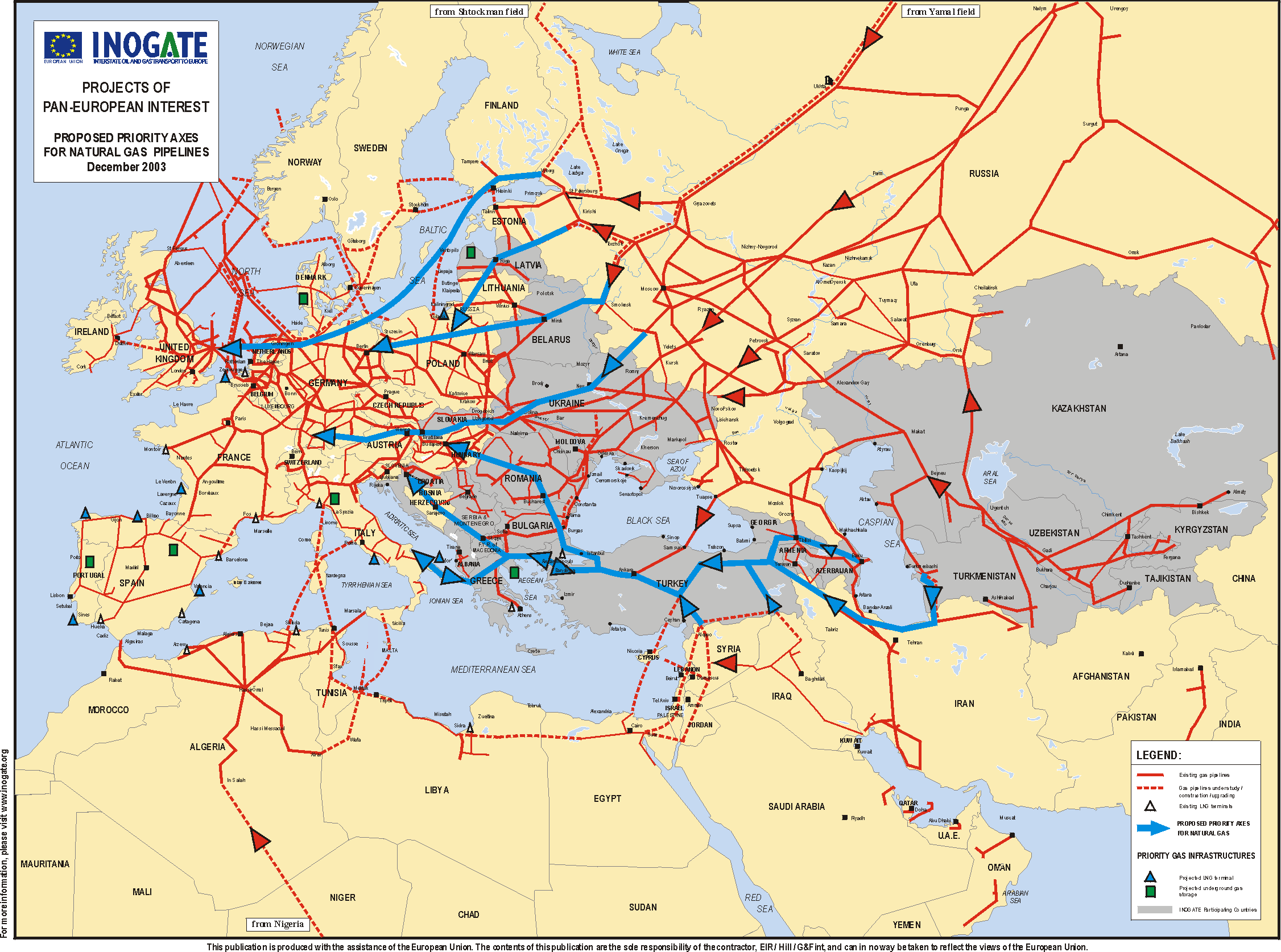
even natural gas is coming from the East Block. Pipelines maps reveal foreign politics, and winter conflicts.


after some google research, and finding out that the first biodiesel car was invented back in 1893, one cannot but wonder why it was never developed.


right now, i'd love to see a detroit diesel v8 engine installed in shubhabah and start off working a day a week with jeanne and make fuel for the van, besides some more for a diesel generator for my own home, and maybe even start saving some fuel for this coming winter. and daydreaming continues...


i come back to farns and talk about this with some people, and they all apreciate the idea, but dont seem very entusiastic about it. i wonder why... why not jump on the idea and start working together. dont know if its because detroit moves slowly, that everyone is busy with sorting themselves out, on a everyday basis, that disables them to combine efforts.


maybe its my naivity as an accidental tourist, but i cannot stop being amazed with jeanne and her energy in creating a better future with her shinny eyes, and generous smile.


in my second day working, i meet rick and his girlfiend, anna, that are helping jeanne out. we get our first trouble solving. one of the pumps is not working, that is supposed to transfer the waste oil from the settling storage, into the machine that warms and stirs it up, separating the water from the oil, the first process, transforming waste oil into veggie oil... actually in summer, jeanne runs her mercedez turbo diesel just on that.


though in winter, with the cold temperatures, the oil tends to freeze, needing to be diluted with some kind of spirits. the biodiesel is produced by adding methanol and methaoxide (fuel used for racing cars and highly toxic).


none of this technology is new, there has been others doing it all over the place.


i'm interested in it, due to its bare necessity as a survival and political act of defying a system, wether its capital or governmental, that has been establishing a form of progress in a non-relyable and non-sustainable usage of petrol, rather than supporting a cheaper and more planet friendly way of producing energy.


or in a more simple way to state it, breaking the status quo you MF!!!!


be kind, rewind


During the Makers Faire'10 in Detroit Ford's Museum, I was working with Andrew, Den Hag'cker I call him, cous' he was born in Den Hague (NL) and his family moved to Michigan State when he was 4 years old.


Makers Faire is an initiative to demonstrate to a larger audience how technology can take different forms in our everyday life. Den Hag'cker is working with OmniCorpDetroit, a new initiative for electronic hacking, ranging from music making machines to bicycle powered batteries used in small cars they put together, passing through Tesla coils.


During the Makers Faire, OCD decided to teach children how to circuit bend toys.


I proposed a complementary activity, which turned out to be antagonistic to the concept OCD proposed, the simplified activity of how to make something out of nothing. By picking up objects that can be commonly found in the city's garbage (a broken radio speaker, an abandoner car speaker, a ghetto blaster subwoofer) I showed kids how to make their own speaker-piano. The intention behind was to dismystify and revealing how sound is produced, having the speaker connected to the 9 volt battery and by interrupting the circuit with various metal objects, and their movement, producing different sounds with, literally, your hands on it.


While back to circuit bending,


Circuit bending a toy, is basically opening up an electronic toy, and look at the chipset inside. By touching different circuits while the toy is playing, the sound will bend. after mapping the circuits that create interesting sound bends, oneself can start soldering them and make some custom changes.


One of the children was utterly cheerful because there was an animal farm sounds toy which she hated and finally she could open it up and hopefully, make something else out of it.


She started by saying that she had never done this before, and that it was the first time she was ever opening up a toy.


Den hag'cker and I were a bit confused how a kid never opened up a toy, something so usual to our childhood. We started questioning why and when did objects became so sacred, far from human touch. A nostalgia trip to our childhood made us recall all the things that we opened up, and messed around. How many radios, toys, broken electric tools, tv remote controls that we 'profaned' while disassembling.


While nostalgia tripping to memory lane, we both started to realize when was it, in the last 20 years that kids stopped opening up electric objects and tweaking them.


We both agreed that, somewhere after the invention (and application to most everyday technological objects) of the microchip, mechanical parts went beyond human touch, due to their reduced size.


The conception of micro, of the barely visible made all those mechanical parts out of touch and out of range from amateur ([French, from Latin amātor, lover, from amāre, to love.]) ability to re-work, and re-cycle, all those mechanical objects.


Towards the end of the 20th century, most things in society started to implode, to become immaterial, invisible and far from being tangible, reducing human agency, the ability to do. I don't remember from who is this quote from (I got it 2nd hand from a friend Mirko Winkel), but I always found it truly revealing: ' if the 20th century was one marked by explosions - of population, of atomic bombs, of information; the 21st century shall be one marked by implosions!'


The question me and Den Hag'cker ended up with was 'how to bring the immaterial back to the realm of the material?', 'how to actually regain 'ability to do' in a sacred world of the object, which abjects the subject?'


After we asked ourselves that, an uncomfortable silence settled in...


gardening & art summer classes


Kt and a summer class of arts and gardening

"Education in the largest sense is any act or experience that has a formative effect on the mind, character or physical ability of an individual. In its technical sense, education is the process by which society deliberately transmits its accumulated knowledge, skills and values from one generation to another."
wikipedia resource

Earlier on our residency we posted an entrance regarding the demolition of the Ferry Pulbic School.
It has become quite clear that to put down a closed school is far less "complex" than having to pay taxes and preserve it.

Dave on a recent talk claimed that his effort to purchase abandoned buildings fell short since they always come with "demolition estimation costs" and demolition practices benefit the state and a small but well protected industry. The so called "demolition prize".

We tend to perceive education to take its most common form under the roof of a school. Living for two months in Detroit we re-discovered diverse educational platforms which focus on passing out skills, enhance mutualism, raise awareness and responsibility, address locality and possibly build an alternative economy practices .
Spread in various "roofs" and initiated by various organizations and individuals these acts respond to the failure of the state to preserve and advance Detroit's educational system.


Wayne State University and University of Detroit Mercy seem to be the only mega foundations promoting Detroit as an educational mecca. On the other hand Universities are just stations in someone's career and therefore embed within the act of temporarily living and subconsciously the act of leaving.

This summer Kt has been teaching art and farming in three locations around Detroit. We "invited ourselves" to her classes and I managed to attend her last teaching sessions in two of the locations.
We came up with a game of drawing your favorite fruit or vegetable
on a paper ribbon, mixing the ribbons and pass them on as "hats" to every one participating. Each kid had to make four questions in order to guess what fruit or vegetable he/she was.
While still difficult to prevent children from looking at their "hats" the game focused on working on the right questions such as:
am i a fruit?
do i grow in our garden?
do i grow above ground?
do i grow on a tree?
am i yellow?
am i round?
etc.


The process of discovering could help them identifying with the object, break it down in forms and shapes, understand the value of the process of growing (gardening) and playfully perform a dialogue of passing out knowledge without the authoritarian overview of the teacher.
Everyone would hold the responsibility of sharing a common set of knowledge (the secret of what is on their friend's hat) and as a unity, by simply answering with a yes or a no could transcend that knowledge to the individual making the questions.


While talking to Joao about our experience, he brought up the term homo ludens introduced by Dutch historian and cultural theorist Johan Huizinga.


Huizinga does not mean that “play turns into culture”. Rather, he sets play and culture side by side, talks about their “twin union”, but insists that “play is primary”.

wikipedia resource


7.30.2010

muffler is a b**** (or in other words auto porn)


The muffler went off again. This time on our way back from Downtown. We stopped on an abandoned gas station, had a cigarette and waited for it to cool down.

Then all three of us "took turns - getting down and dirty - doing our thing". Joao first (the specialist), then KT ( the experienced) and then me (the virgin). Three wires applied - one for each of us.

Muffler is a b**** but in the end of the day a man's got to do what a man's got to do - wire it up and move on.

7.19.2010

Urban Farming as a Political Stand


urban farming as a political stand, and what does it really means?

the other day, me and N were talking with F, one of the various players in the ongoing urban (re)development of the future of detroit, which comes under the concept of morphogenesis.

while F is describing what he envisions for the future of detroit, he says something like 'i dont mind people keep farming in detroit, its just not for me'.

in some way, there is a general view that farming is just farming, which is actually a view i shared before i spent some time with the farnsworth community. while living in europe, and reading about what was happening here, it always confused me. why urban farming?

urban farming, as i came to understand, after witnessing how the community of farnsworth operates within the situation of a post-industrial shrinking city center as detroit, takes a political stand in many different levels, maybe too many to describe it in a short blog post as this.

so i will just list the three main points that are obvious to me at the moment, and throw some links to other resources that an investing reader will surely appreciate.

1) urban farming is creating an alternative food economy to the existing monopoly of genetic manipulated food industry, which is spreading through the world (thank god europe is resisting the invasion of GMO companies, but for how long will it endure the economic pressures?)

2) through the teaching of farming to children of the housing projects, which are enduring the daily violence of poverty, exposes them indirectly to the philosophical concepts of mutualism, both biological and economic, what it means to relate to a living being and its ethics, the feminist theory of 'taking care', (after some millennia of man driven warfare, isnt it enough?), and the drawing lessons of plants, giving a sense of geometry and an understanding/connection of life cycles.

3) using farming as a way to clean the soil and air from pollutants derived from the incinerator in detroit center, such as dioxins (a powerful poison used in chemical warfare, and released in small amounts by incinerators that has the ability to accumulate in living organisms)


the implications of such a political stand go beyond these three points and are far more complex in the situation detroit finds itself, and the way the organization of the food industry in the us is managed.

'scary shit, i tell you' someone said.

PS: something i found later on
Critical Art Ensemble, work entitle
d Free Range Grain
The world according Monsanto and the story around it