8.30.2010

back to the future Part 11


We left early in the morning, avoiding closures and goodbyes.
I am not a goodbye person and under the circumstances, leaving things open seemed the best thing to do.
Don't know when and if I'll be able to come back to Detroit. Don't really know if the ones I met will be there when I have the chance to do so.
I assume and speculate on the future of this city but predictions are founded on mostly temporary facts and practices and the transitory features of Detroit do not hold space for a prefixed outcome.
Detroit is it's people and they are for sure not a homogenic bunch of individuals. Their actions will determine their future as well as the city's. Some will leave and others will come, some will visit and some will stay.
Nine weeks is not three years, but three years is not ten and so on.

What Joao stated regarding our return to the Netherlands is that "we are not going back but forward". It's a "back to the future" kinda thing, realizing that "to" embeds "with", "in" and "on".


I guess Michael J. Fox's current Parkinson state is a visual interpretation of that shaky state of being back and forth, in and out of the past and future. Shaky is the new now.

Detroit is the city of leaving.
Detroit is the city of the future.
Detroit is the city I spent nine weeks of my life in.

8.27.2010

party bus


Having to re-thing on how to construct a social event that evolves around an object, but still stay true to our non-tangible performative practices, we came up with an idea of hosting a final tour around the city on a bio-diesel bus.
The YES FARM became a bus station, and passengers had to obtain a ticket from a temporary stand inside the space.
We decided on three travel routes and planned four bus rides, inviting all the people we had encountered during our stay in the city.


All passengers were given a questionnaire to fill in while they were waiting at the YES FARM station. Questions evolved around the notions of "living in Detroit" and "leaving from Detroit" and worked as a starting point to our discussions on the bus.


While on the bus, we decided to stop beating around the bush and pose themes of discussion in a slightly more explicit manner than before. We chose to be as laconic as possible and generate fruitful conversations among the passengers. We mostly listened allowing members of the group to reflect on each others' statements.


The tours were recorded and the responsibility of visual documentation was passed to the passengers. A photo camera was given to a member of every group allowing to capture stills of what was happening inside as well as outside the bus.

Recordings as a well as additional photos will be posted shortly.

8.25.2010

for the living and the leaving


horoscope


as we prepare to make our last performance, we read each other horoscopes, and the scorpio's one says all about what we are intending with our work...


SCORPIO (Oct. 23-Nov. 21): Most discussions on TV news shows involve


so-called experts shouting simplistic opinions at each other. They may


provide some meager entertainment value, but are rarely enlightening. In


contrast to these paltry spectacles were the salons at Paris's Cafe


Guerbois in 1869. A group of hard-working artists and writers gathered


there to inspire each other. The painter Claude Monet wrote that their


discussions "sharpened one's wits, encouraged frank and impartial inquiry,


and provided enthusiasm that kept us going for weeks . . . One always


came away feeling more involved, more determined, and thinking more


clearly and distinctly." That's the kind of dynamic interaction you should


seek out in abundance, Scorpio.


PISCES (Feb. 19-March 20): *Allure* magazine sought out Luca Turin and


Tania Sanchez, the women who wrote the book *Perfumes: The A to Z


Guide.* "What are the sexiest-smelling perfumes of all time?" they asked.


Turin and Sanchez said Chinatown was at the top of their list. Their


explanation: "If wearing Opium is like walking around with a bullhorn


shouting, 'Come and get it!', Chinatown is like discreetly whispering the


same thing." The Chinatown approach is what I recommend for you in the


coming weeks, Pisces.


LEO (July 23-Aug. 22): A Chinese company reached out to me by email


today. The message began, "As the leading professional conveyor belt


manufacturers in Shanghai, we present to you our very best sincere


regards, desiring to find out if there is a chance for us to be your top-rate


conveyor belt supplier." I wrote back, thanking them for their friendly


inquiry. I said that personally I didn't have any need of conveyor belts


right now, but I told them I would check with my Leo readers to see if


they might. According to my reading of the astrological omens, you see,


you're entering a time when it makes sense to expand and refine your


approach to work. It'll be a good time, for example, to get more efficient


and step up production. So how about it? Do you need any conveyor


belts?


8.24.2010

Drawing Marathon @ THE YES FARM


Blake and Ben came up with the idea of a drawing marathon and an exhibition at The Yes Farm for this weekend. We have been working putting the place into shape to host the artworks and the guests.


Three rooms were cleaned and freshly painted and a stage in the main hall was set to facilitate the community's School Of Rock.


School Of Rock is a summer program initiated by Tim and the children of the Farnsworth community. Once per week the kids would "squa"t Tim's house, practicing on how to play the drums, form a band and perform on stage.


We took the task of fixing the stage, painting the background black, adding lights and dark curtains.


The School Of Rock will be performed on Saturday during the painting marathon.


On Sunday The Yes Farm throw a raffle where people could buy raffles for 1$, take part in a lottery and if their number would come up they could choose to take home one of the drawings exhibited at the space.

8.13.2010

making your own fuel (and leave ukraine in peace for a winter or so)


today we met jeanne, one of the most wonderful women i have seen.


she, besides many other things, creates her own fuel from a garage that she traded for a diesel truck.


she has been setting her fuel space for a couple of years now, and has processed waste organic fuel into vegetable oil that can be used to power diesel engines, diesel generators, and oil heating systems.


i contacted her, about the possibility of making a biodiesel station for the yes farm, and her reply was 'why dont you come to work with me? it took me a while and about 50 g's to put all this together. i'm happy to exchange company while doing it for the passing of knowledge i have gathered...', i hear through the phone.


so i talk with eric, the guy that saved the muffler, and we both went down to jeanne's garage, and his eyes where shinning with the imagination for all the potentialities that cheap vegetable fuel brings.


he starts talking about diesel generators that are usually used in welding workshops, and the shift between fossil to vegetable fuel, the possibility of using it on oil heating systems for the winter (in detroit winter temperatures can go down to -29º c) and last but definately not the least, the application to cars engines.


he has the mechanical knowledge of how generators and engines can process the fuel and produce energy, which is complementary to jeanne, that holds the knowledge of how the chemical process of transforming waste organic fuel into biodiesel.


i think to myself 'if these two persons meet and start working together, will be a great synergy, a 1+1=3...'


somehow, back here in the states, there are very few diesel cars. most diesel engines are only found in trucks, with a few exceptions, while back in europe is pretty much standard that cars run on diesel. the european concern resides in the fact that diesel pollutes far more than a free lead gasoline engine, and the fact of not possessing many petroleum primary resources.


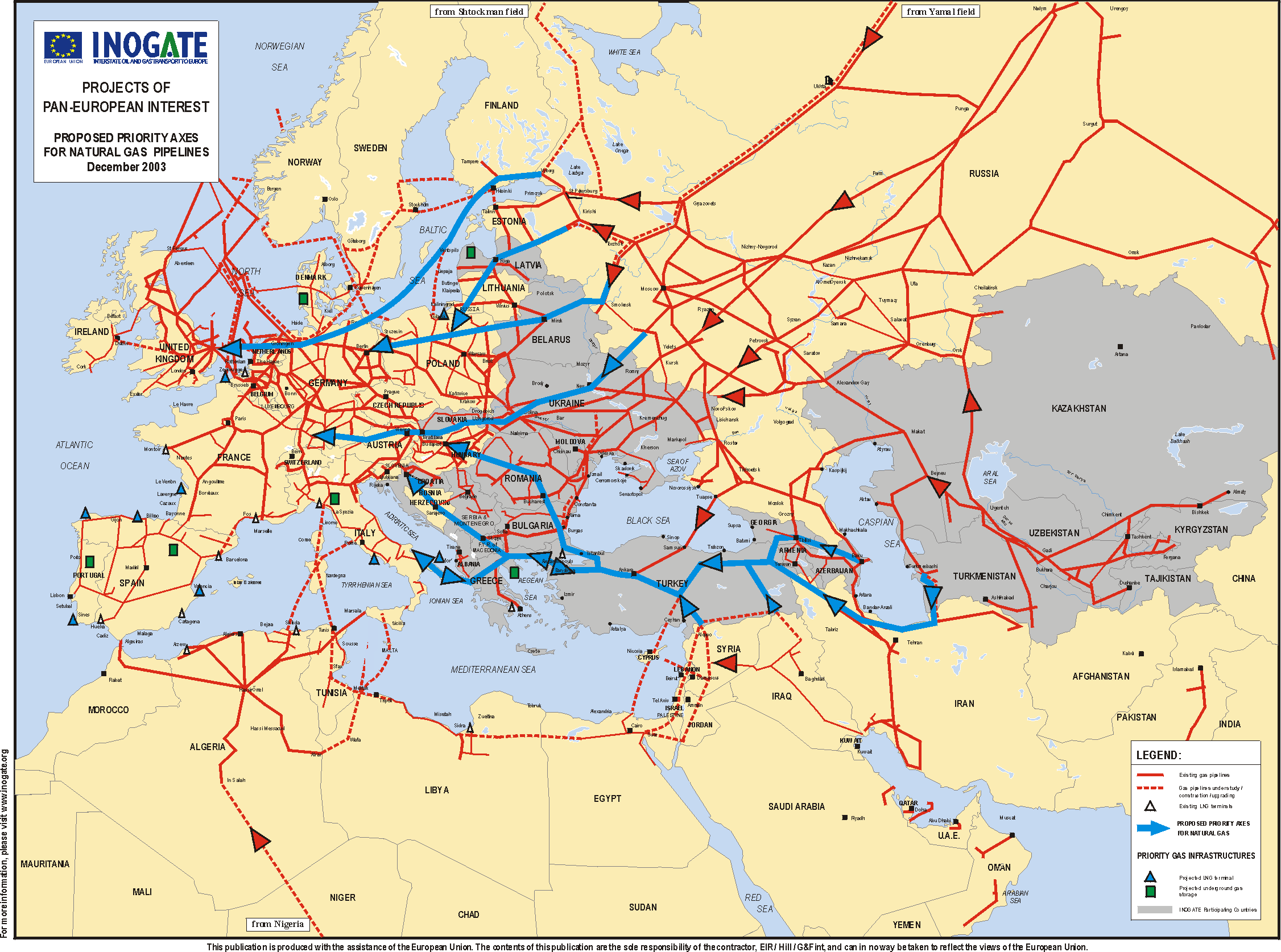
even natural gas is coming from the East Block. Pipelines maps reveal foreign politics, and winter conflicts.


after some google research, and finding out that the first biodiesel car was invented back in 1893, one cannot but wonder why it was never developed.


right now, i'd love to see a detroit diesel v8 engine installed in shubhabah and start off working a day a week with jeanne and make fuel for the van, besides some more for a diesel generator for my own home, and maybe even start saving some fuel for this coming winter. and daydreaming continues...


i come back to farns and talk about this with some people, and they all apreciate the idea, but dont seem very entusiastic about it. i wonder why... why not jump on the idea and start working together. dont know if its because detroit moves slowly, that everyone is busy with sorting themselves out, on a everyday basis, that disables them to combine efforts.


maybe its my naivity as an accidental tourist, but i cannot stop being amazed with jeanne and her energy in creating a better future with her shinny eyes, and generous smile.


in my second day working, i meet rick and his girlfiend, anna, that are helping jeanne out. we get our first trouble solving. one of the pumps is not working, that is supposed to transfer the waste oil from the settling storage, into the machine that warms and stirs it up, separating the water from the oil, the first process, transforming waste oil into veggie oil... actually in summer, jeanne runs her mercedez turbo diesel just on that.


though in winter, with the cold temperatures, the oil tends to freeze, needing to be diluted with some kind of spirits. the biodiesel is produced by adding methanol and methaoxide (fuel used for racing cars and highly toxic).


none of this technology is new, there has been others doing it all over the place.


i'm interested in it, due to its bare necessity as a survival and political act of defying a system, wether its capital or governmental, that has been establishing a form of progress in a non-relyable and non-sustainable usage of petrol, rather than supporting a cheaper and more planet friendly way of producing energy.


or in a more simple way to state it, breaking the status quo you MF!!!!


be kind, rewind


During the Makers Faire'10 in Detroit Ford's Museum, I was working with Andrew, Den Hag'cker I call him, cous' he was born in Den Hague (NL) and his family moved to Michigan State when he was 4 years old.


Makers Faire is an initiative to demonstrate to a larger audience how technology can take different forms in our everyday life. Den Hag'cker is working with OmniCorpDetroit, a new initiative for electronic hacking, ranging from music making machines to bicycle powered batteries used in small cars they put together, passing through Tesla coils.


During the Makers Faire, OCD decided to teach children how to circuit bend toys.


I proposed a complementary activity, which turned out to be antagonistic to the concept OCD proposed, the simplified activity of how to make something out of nothing. By picking up objects that can be commonly found in the city's garbage (a broken radio speaker, an abandoner car speaker, a ghetto blaster subwoofer) I showed kids how to make their own speaker-piano. The intention behind was to dismystify and revealing how sound is produced, having the speaker connected to the 9 volt battery and by interrupting the circuit with various metal objects, and their movement, producing different sounds with, literally, your hands on it.


While back to circuit bending,


Circuit bending a toy, is basically opening up an electronic toy, and look at the chipset inside. By touching different circuits while the toy is playing, the sound will bend. after mapping the circuits that create interesting sound bends, oneself can start soldering them and make some custom changes.


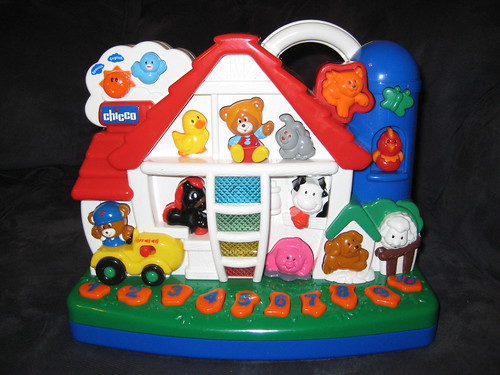
One of the children was utterly cheerful because there was an animal farm sounds toy which she hated and finally she could open it up and hopefully, make something else out of it.


She started by saying that she had never done this before, and that it was the first time she was ever opening up a toy.


Den hag'cker and I were a bit confused how a kid never opened up a toy, something so usual to our childhood. We started questioning why and when did objects became so sacred, far from human touch. A nostalgia trip to our childhood made us recall all the things that we opened up, and messed around. How many radios, toys, broken electric tools, tv remote controls that we 'profaned' while disassembling.


While nostalgia tripping to memory lane, we both started to realize when was it, in the last 20 years that kids stopped opening up electric objects and tweaking them.


We both agreed that, somewhere after the invention (and application to most everyday technological objects) of the microchip, mechanical parts went beyond human touch, due to their reduced size.


The conception of micro, of the barely visible made all those mechanical parts out of touch and out of range from amateur ([French, from Latin amātor, lover, from amāre, to love.]) ability to re-work, and re-cycle, all those mechanical objects.


Towards the end of the 20th century, most things in society started to implode, to become immaterial, invisible and far from being tangible, reducing human agency, the ability to do. I don't remember from who is this quote from (I got it 2nd hand from a friend Mirko Winkel), but I always found it truly revealing: ' if the 20th century was one marked by explosions - of population, of atomic bombs, of information; the 21st century shall be one marked by implosions!'


The question me and Den Hag'cker ended up with was 'how to bring the immaterial back to the realm of the material?', 'how to actually regain 'ability to do' in a sacred world of the object, which abjects the subject?'


After we asked ourselves that, an uncomfortable silence settled in...